Objectives you can hand over
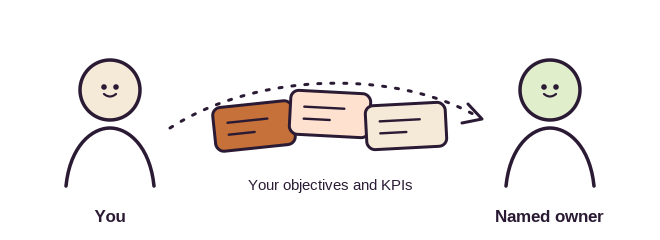
Your KPIs and objectives become somebody's explicit job. We hold the day-to-day: dependencies, risks, the awkward conversations. You keep the direction.
Delivery Management
Give your KPIs and objectives to delivery managers who own them day to day, run them on Fast Flow principles, and report back clearly, so you no longer need to chase for updates.
What you get
Your KPIs and objectives become somebody's explicit job. We hold the day-to-day: dependencies, risks, the awkward conversations. You keep the direction.
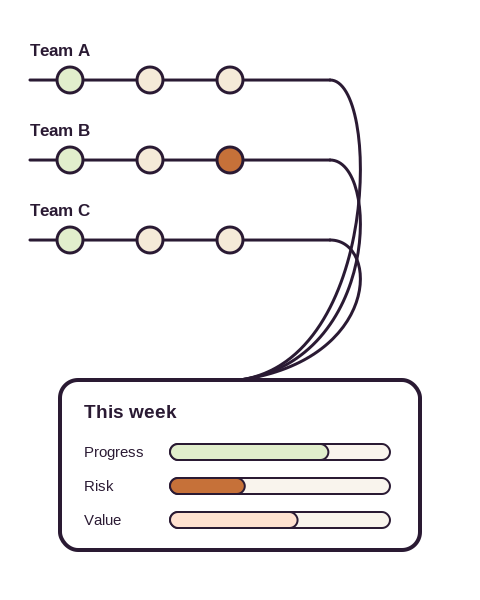
The same plain-language read every week: what moved, what is blocked, what changed in the forecast. Written to be skimmed, and honest when the news is bad.
Fast Flow principles applied to the running of the work: limit what is in progress, shorten the queues, cut the handoffs that quietly cost weeks.
Most delivery time is waiting, not working. Taking the waiting out is usually the fastest way to bring value forward, without asking anyone to work harder.
Teams and leaders learn to read flow for themselves, so the control does not walk out of the door when the engagement ends.
Then this is about giving them the flow practices and reporting to work with. Worth a conversation either way.
Book a callAssurance without chasing
Reporting is a core part of the work. Four things, at a cadence you set, so nothing about your initiatives is a surprise.
Measured against the KPI you handed over, not against a plan nobody believes in any more.
On track against the KPIHow long work is actually taking, where it is queuing, and what that means for the dates you care about.
Cycle time down from 14 to 9 daysA short list of what is genuinely at risk, and the few calls only you can make, flagged early rather than on the deadline.
2 decisions needed from youTime in the diary to ask anything behind the report. Most leaders find they need it less as the picture gets clearer.
Thursday, 30 minutesWe agree exactly which objectives and KPIs we are holding, meet the teams and stakeholders, and get to a first honest baseline of where the work really stands.
The reporting rhythm starts. We work the biggest constraints, keep work in progress honest, and you begin to see time to value shorten rather than hearing that it will.
The cadence becomes ordinary and your own managers pick it up. We stay as long as it is useful, and make sure nothing is left loose when we leave.
Half an hour on the initiative you worry about most. We will tell you how we would take it on, and what you would see in the first month.